
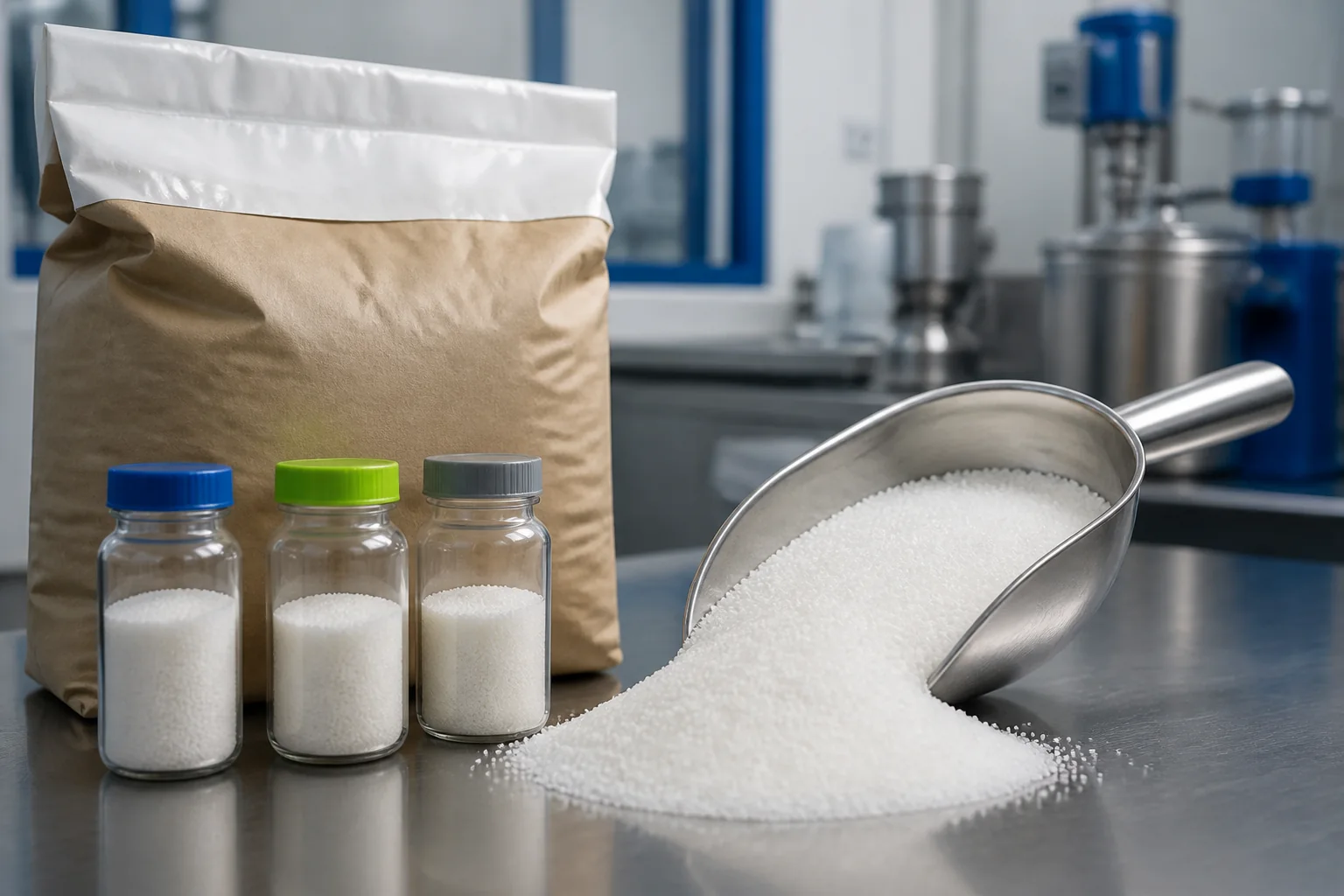
Dry PAM flocculant stores reliably when its moisture-resistant packaging remains sealed and the warehouse is dry, clean and protected from temperature extremes. Once water reaches the product, agglomeration and handling problems can develop quickly.
Confirm package construction
Industrial dry polymer is commonly packed in a multi-layer bag with a moisture barrier. Confirm net weight, pallet arrangement and any container liner or wrapping required for the route. Packaging should remain identifiable by product and lot without relying on loose paperwork.
Inspect on receipt
Check container and pallet condition before unloading. Record wet cartons, torn bags, punctures, compressed corners and broken stretch wrap. Segregate damaged material under the site procedure. Do not return spilled polymer to an intact bag because water, dirt or other chemicals may contaminate it.
Keep the warehouse dry
Store bags under cover, off the floor and away from leaks, washdown and humid air discharge. Keep pallets stable and within supplier stacking guidance. Protect from direct heat and sunlight. Use first-in, first-out lot rotation and retain enough lot information to investigate a process concern.
Control powder handling
Follow the SDS for PPE, dust control and spill response. Dry PAM becomes extremely slippery when wet. Use methods that collect dry material without spreading it, and prevent wash water from carrying polymer to unintended drains. Keep the feeder hopper covered and clean.
Avoid moisture at the make-down point
Steam, spray and condensation near an open bag or hopper can create lumps before the product reaches the wetting device. Close partial bags promptly using the site procedure. Do not leave powder in an exposed day hopper longer than necessary.
Manage dissolved solution separately
Dissolved PAM does not share the storage life of sealed dry product. Prepare volumes that suit the consumption rate and supplier guidance. Mark batch time and concentration, keep the tank covered and avoid contamination. If viscosity or performance changes with age, shorten the batch cycle and confirm make-down water quality.
Plan export and seasonal risk
Long ocean transit, high humidity, container condensation and repeated handling raise packaging risk. State the destination, route, quantity and warehouse conditions during quotation. Ask for the current packing configuration and loading details.
Use documents and reference checks
Keep SDS, TDS, COA and receiving record with the lot. When process risk justifies it, compare a new lot with retained approved material using the same feed and preparation. The PAM quality and supply guide explains how document control and application evidence work together.
Do not assign a universal shelf life
Shelf life depends on product, package integrity and storage conditions. Use the current supplier statement for the proposed grade and apply the site’s inventory policy. A calendar date does not rescue material that has been wetted or contaminated, and an intact older bag should not be accepted outside agreed conditions without review.
Plan the container load
Confirm bags per pallet, pallets per container, gross weight and unloading method before shipment. Check destination weight limits and whether pallets, slip sheets or floor loading are appropriate. Request moisture protection suitable for the route. Do not assume the maximum physical quantity is the safest or legally transportable load.
Manage partial bags and day bins
Use a defined method for opening, resealing, identifying and returning partial bags. Keep grade and lot visible. Empty day bins before introducing an incompatible grade when cross-contamination could affect the process. Avoid makeshift containers that admit humidity or cannot be traced.
Protect workers and floors
Dry and wet PAM require careful housekeeping. Even a small wetted spill can make a large area slippery. Isolate the area, use the SDS procedure and prevent uncontrolled flushing. Verify that handling tools and vacuum equipment are suitable for the product and site hazards.
Inspect material before feeding
Look for hard lumps, moisture damage, foreign material and damaged bag liners. Do not break contaminated lumps into the feeder. If several bags from a pallet show a similar problem, quarantine the affected lot and document container, pallet and bag locations.
Separate warehouse quality from application quality
A free-flowing powder can still be the wrong grade, and an approved grade can be damaged by storage. Receiving checks confirm identity and condition; the COA supports lot conformity; a reference test checks application response. Use all three where process risk requires them.
Prepare for weather during unloading
Rain or snow can damage moisture-sensitive bags quickly. Use a covered unloading route and avoid placing pallets on wet ground. Allow safe acclimatization if cold packages could collect condensation in a warm humid building, following supplier advice and site procedure.
Close the traceability loop
Record which lots are issued to each make-down system and when. If performance changes, operations can compare the timeline with feed and equipment data. Traceability also allows a targeted hold instead of stopping all polymer inventory.