
An interrupted supply can create pressure to purchase any available PAM flocculant. Availability is a commercial fact, not proof of equivalence. Use a short, controlled review to distinguish a viable temporary substitute from a product that could disrupt preparation or treatment at the worst possible time.
Establish the remaining operating reserve
Confirm the actual approved stock and realistic daily consumption before deciding how urgent the replacement is. Check whether operations can safely reduce demand or schedule a controlled trial within that reserve. Do not rely on warehouse records alone if partially used bags or prepared-solution losses distort inventory. Purchasing should ask for confirmed candidate availability and dispatch details rather than infer stock from a product listing. Keep shipment confirmation separate from application approval.
Screen identity and preparation first
Request the candidate product code, ionic family, form, TDS and SDS. Compare its proposed preparation method with the installed system. A readily available emulsion is not a drop-in replacement for a dry-powder make-down arrangement, and two powders may have different handling or solution behaviour. Check the solution and pump review before a rushed order. Reject unexplained identity or document discrepancies instead of treating urgency as a reason to accept them.
Run a limited but meaningful comparison
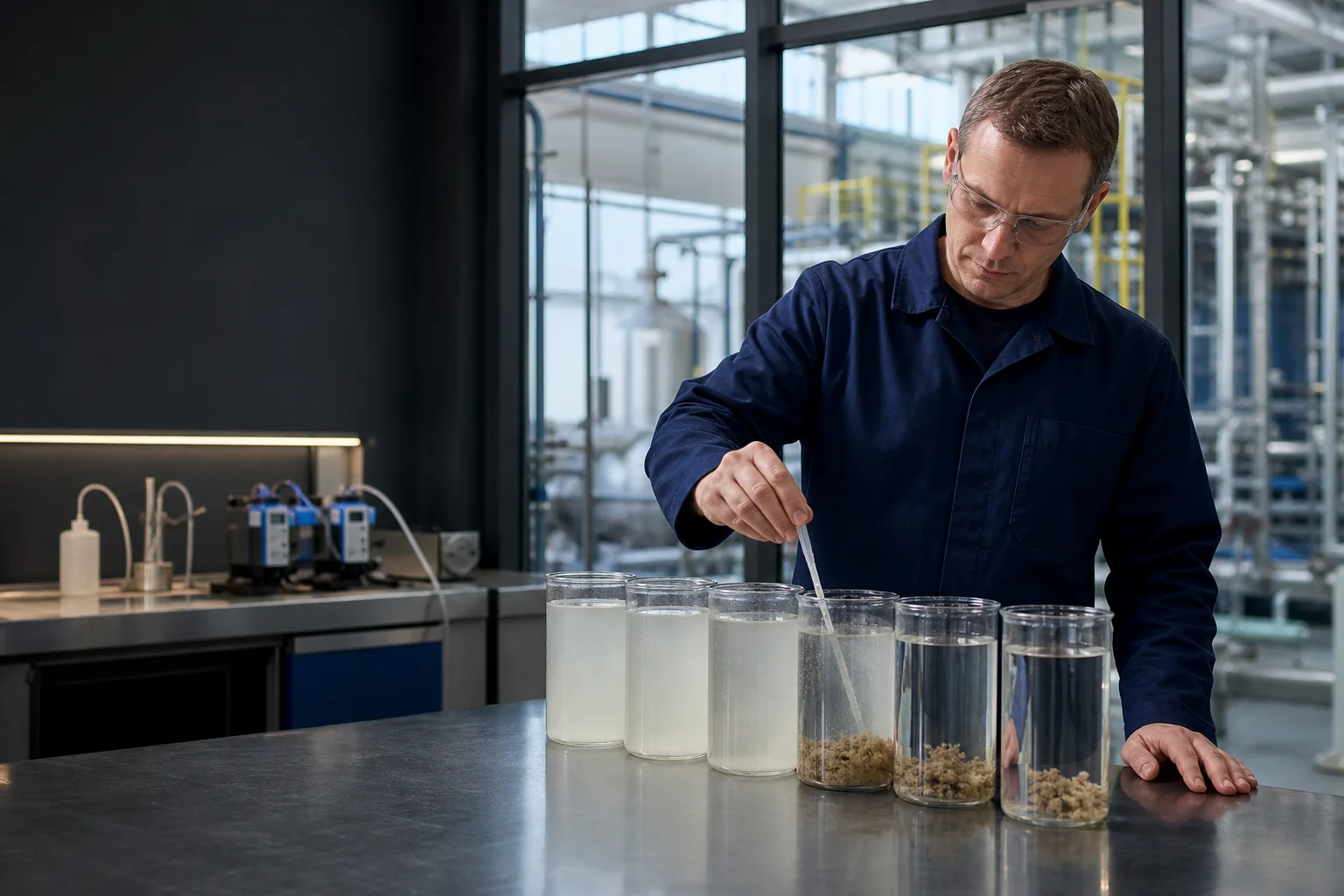
Use an identifiable incumbent reference if available and test the same representative feed. Compare a practical dose range and the required separator endpoint. Record preparation, solution age and actual dose basis. Where there is insufficient time to qualify the complete operating range, identify the limits of the evidence and restrict the approval accordingly. The normal supplier-change procedure defines the broader evaluation that should follow if the substitute is considered for continued supply.
Manage the temporary changeover
Agree a limited quantity and a controlled operating introduction with the responsible plant team. Label and segregate the substitute and preserve its lot record. Do not combine it with incumbent powder or solution merely to empty existing containers. Define how unacceptable performance will be detected and what fallback is possible. A temporary successful run should not automatically authorize permanent substitution; review performance, stock and documents once the immediate interruption is resolved.
Purchase review worksheet
Complete the evidence column with measured values, observations or an agreed document reference. An unanswered item is a reason to clarify the sample or quotation, not to assume that two products are equivalent. Keep the same worksheet with the trial record so the purchasing and operating teams approve the same conditions.
| Review item | Evidence to obtain | Decision before ordering |
|---|---|---|
| Reserve | Verified usable stock and consumption | Urgency is based on actual operating cover |
| Candidate | Confirmed identity, availability and preparation method | Supply claim and technical fit are both checked |
| Temporary approval | Dose, endpoint, limits and changeover responsibility | Short-notice use has explicit boundaries |
Request a focused PAM flocculant quotation
Send the feed source, solids concentration, pH or conductivity, operating temperature and separator type alongside the monthly quantity, package preference and destination. Include the specific observations in the worksheet above. If a current grade is being replaced, provide its available technical data and the active dose rather than only the trade name. Commercial availability, sample quantities and delivered terms should be confirmed for the selected product, not inferred from an illustrative application.
Arrange the comparison through the PAM trial planner and review quality documents and supply requirements before committing to a shipment. Gongyi Xinqi Polymer Co., Ltd. can review the application information and discuss a suitable sample range. Application suitability remains conditional on representative testing; a polymer recommendation is not a guarantee of plant performance or regulatory compliance.