
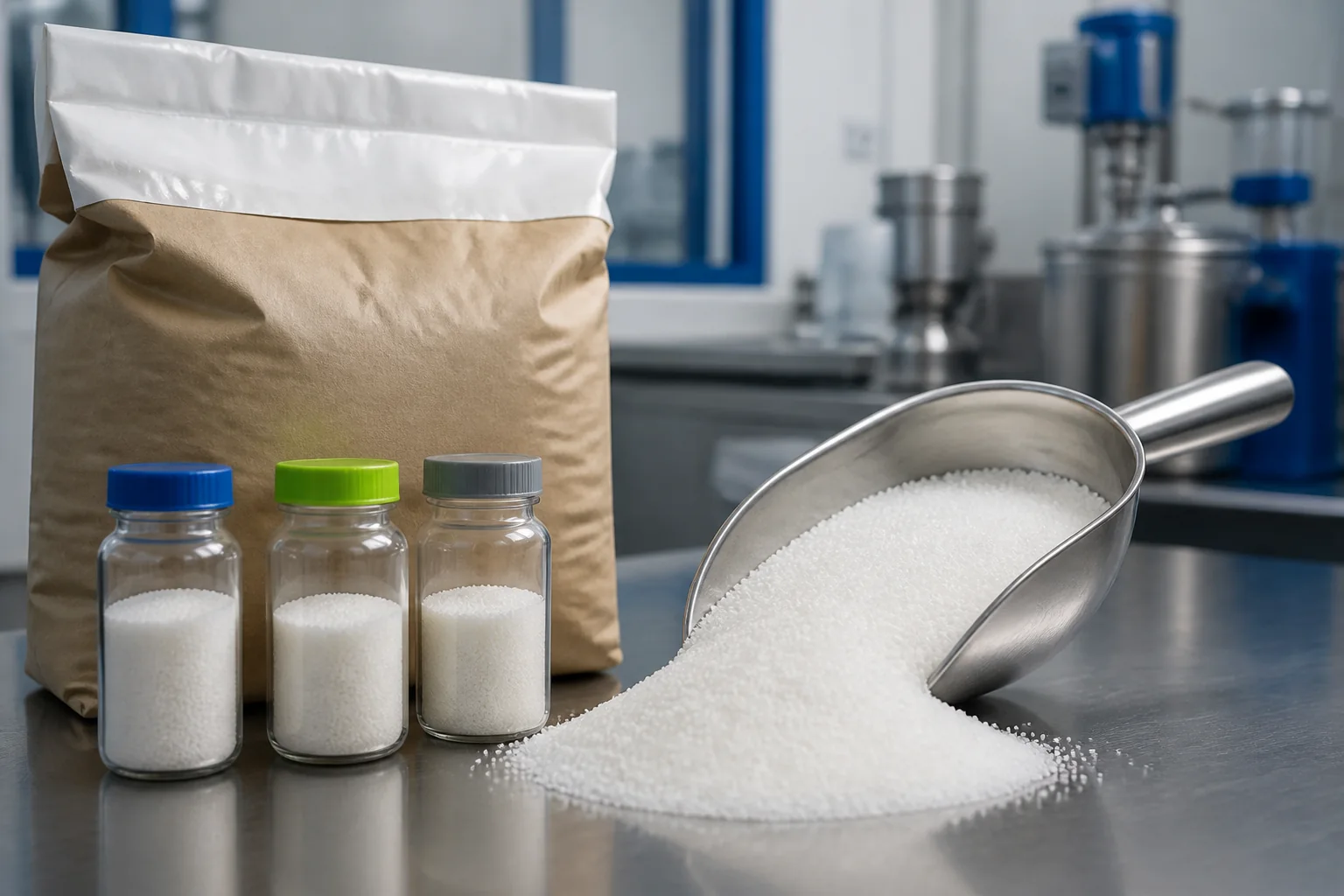
PAM flocculant quality is demonstrated by consistent application performance supported by appropriate documents and traceable lots. A single viscosity number or unusually broad specification is not enough to predict plant results.
Documents to request
- Technical data sheet for the proposed grade
- Safety data sheet in the required language
- Certificate of analysis for the shipped lot
- Packaging and storage instructions
- Country-specific or end-use documentation where applicable
Read the COA in context
Moisture, particle size, apparent viscosity and ionic indicators can support incoming inspection, but test methods and solution conditions matter. Ask how viscosity is measured and do not compare values from different concentrations, temperatures or instruments as if they were equivalent. The application trial remains the primary grade-selection evidence.
Packaging and storage
Dry PAM is commonly supplied in moisture-resistant bags. Keep bags sealed, dry and protected from heat, rain and damaged pallets. Use safe dust-control practices and follow the SDS. Rotate stock by lot and record bag condition on receipt. Once dissolved, polymer solution has a much shorter practical use period and should be managed under the product instructions and site conditions.
Build a comparable quotation
State product form, required active basis, packaging, quantity, Incoterm, destination, documentation and sample status. Compare treatment cost and delivered terms rather than bag price alone. For factory and product information, use the primary Gongyi Xinqi Polymer website.
Incoming-lot verification
Confirm package identity and COA, then run a controlled reference test against retained material when process risk justifies it. Keep make-down water, concentration, aging and feed sample consistent. A quick reference test can distinguish a material concern from a changing plant feed.