
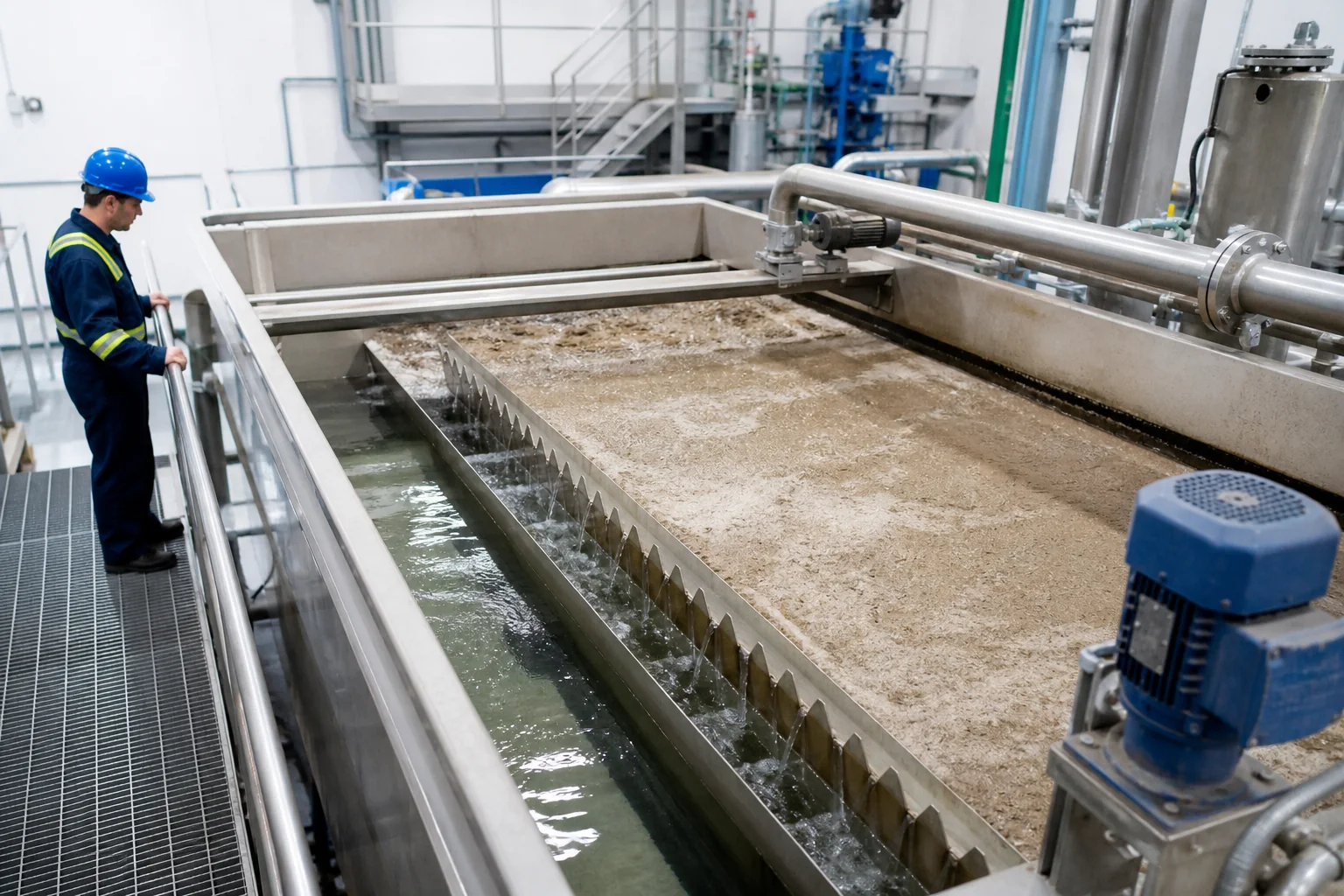
PAM flocculant for DAF must build floc that captures suspended solids, fats or oil and remains light and strong enough to attach to microbubbles. Polymer selection cannot compensate for poor coagulation, air saturation or hydraulic control.
Stabilize coagulation before optimizing PAM
Many DAF systems use PAC, alum or ferric salt before polymer. Confirm pH and coagulant dose first. Add the dilute PAM after destabilization under enough mixing for distribution but not enough to break the growing floc. Feeding both chemicals at the same turbulent point can waste polymer.
Screen the ionic family
Cationic products are often tested for organic food, dairy or slaughterhouse wastewater. Anionic products may work after inorganic coagulation. The correct starting family depends on the wastewater and residual coagulant, so include untreated and coagulated samples in the bench programme.
Judge the full DAF response
- Effluent turbidity, TSS, oil or COD target
- Float blanket thickness, drainage and skimmability
- Floc attachment to bubbles and shear resistance
- Coagulant and active-polymer dose
- Recycle pressure, air-water ratio and nozzle condition
Weak float is not automatically a polymer failure. Blocked release nozzles, changing equalization, insufficient air or hydraulic overload can produce similar symptoms. Confirm mechanical conditions during each product comparison.
Scale up carefully
Bench tests can identify charge and dose ranges, but bubble attachment and skimmer behavior must be verified on the DAF. Trial two or three candidates across normal feed variation. The trial should define a stable range, not one favorable grab sample.