
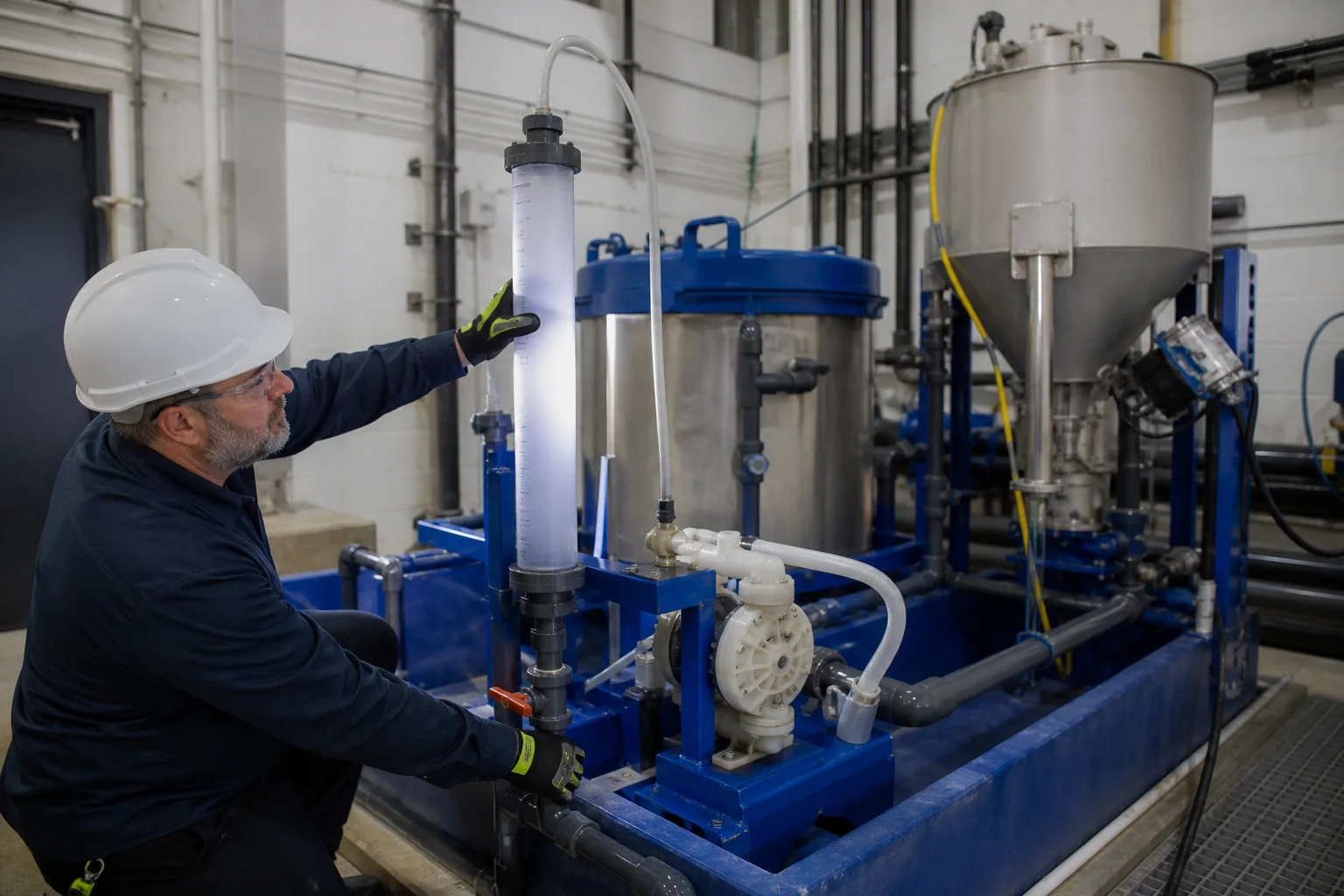
Buying PAM flocculant for an existing pump requires more than matching the product name. The prepared solution must move reliably through the actual tank, suction line, pump and injection point. Review concentration and preparation behaviour with the equipment limits before assuming that a candidate grade can replace the incumbent.
Describe the prepared solution, not only the powder
Provide the proposed stock concentration, preparation water, water temperature, mixing method and solution age at dosing. Viscosity depends on these conditions as well as the polymer characteristics. A viscosity figure measured by a different method or at a different concentration is not directly transferable. Ask the supplier which measurement conditions accompany its data. The specification guide helps distinguish descriptive product data from an application acceptance requirement.
Check suction and transfer constraints
Long or restricted suction lines, valves, elevations and incomplete tank drawdown can interfere with reliable delivery of viscous solutions. Review the arrangement with the pump manufacturer, including materials and the allowable fluid characteristics. Do not assume that a pump designed for water delivers its rated flow with a PAM solution. Air entry or intermittent feeding can resemble a weak polymer response. Record the actual flow under representative operating conditions and compare it with the intended dose.
Measure output after candidate preparation
Calibrate pump output using the prepared candidate and the installed discharge conditions where safely practicable. Keep concentration and aging controlled during the measurement. Calculate the resulting treatment dose rather than copying the incumbent pump percentage. A lower solution concentration may improve handling but require more solution flow and storage. Check both constraints before deciding whether dilution is practical. Refer to the dosing calculation procedure for the difference between a pump setting and a measured dose.
Include cleaning and operating range in approval
Ask operators whether the candidate causes persistent undissolved material, variable tank discharge or unusual cleaning requirements. Review the low and high operating demand, not only a full tank at one setting. Do not promise that a particular ionic family is universally suitable for every pump. Product approval should identify the tested concentration and preparation conditions alongside the separator result. If equipment changes are needed, quote them separately so purchasing can compare the complete conversion cost.
Purchase review worksheet
Complete the evidence column with measured values, observations or an agreed document reference. An unanswered item is a reason to clarify the sample or quotation, not to assume that two products are equivalent. Keep the same worksheet with the trial record so the purchasing and operating teams approve the same conditions.
| Review item | Evidence to obtain | Decision before ordering |
|---|---|---|
| Solution | Concentration, water, temperature and aging | Supplier and equipment data use comparable conditions |
| Pump | Measured delivery with actual solution | Dose is achieved across the required operating range |
| Capacity | Tank cycle, transfer and injection requirements | Dilution or grade change does not create a bottleneck |
Request a focused PAM flocculant quotation
Send the feed source, solids concentration, pH or conductivity, operating temperature and separator type alongside the monthly quantity, package preference and destination. Include the specific observations in the worksheet above. If a current grade is being replaced, provide its available technical data and the active dose rather than only the trade name. Commercial availability, sample quantities and delivered terms should be confirmed for the selected product, not inferred from an illustrative application.
Arrange the comparison through the PAM trial planner and review quality documents and supply requirements before committing to a shipment. Gongyi Xinqi Polymer Co., Ltd. can review the application information and discuss a suitable sample range. Application suitability remains conditional on representative testing; a polymer recommendation is not a guarantee of plant performance or regulatory compliance.