
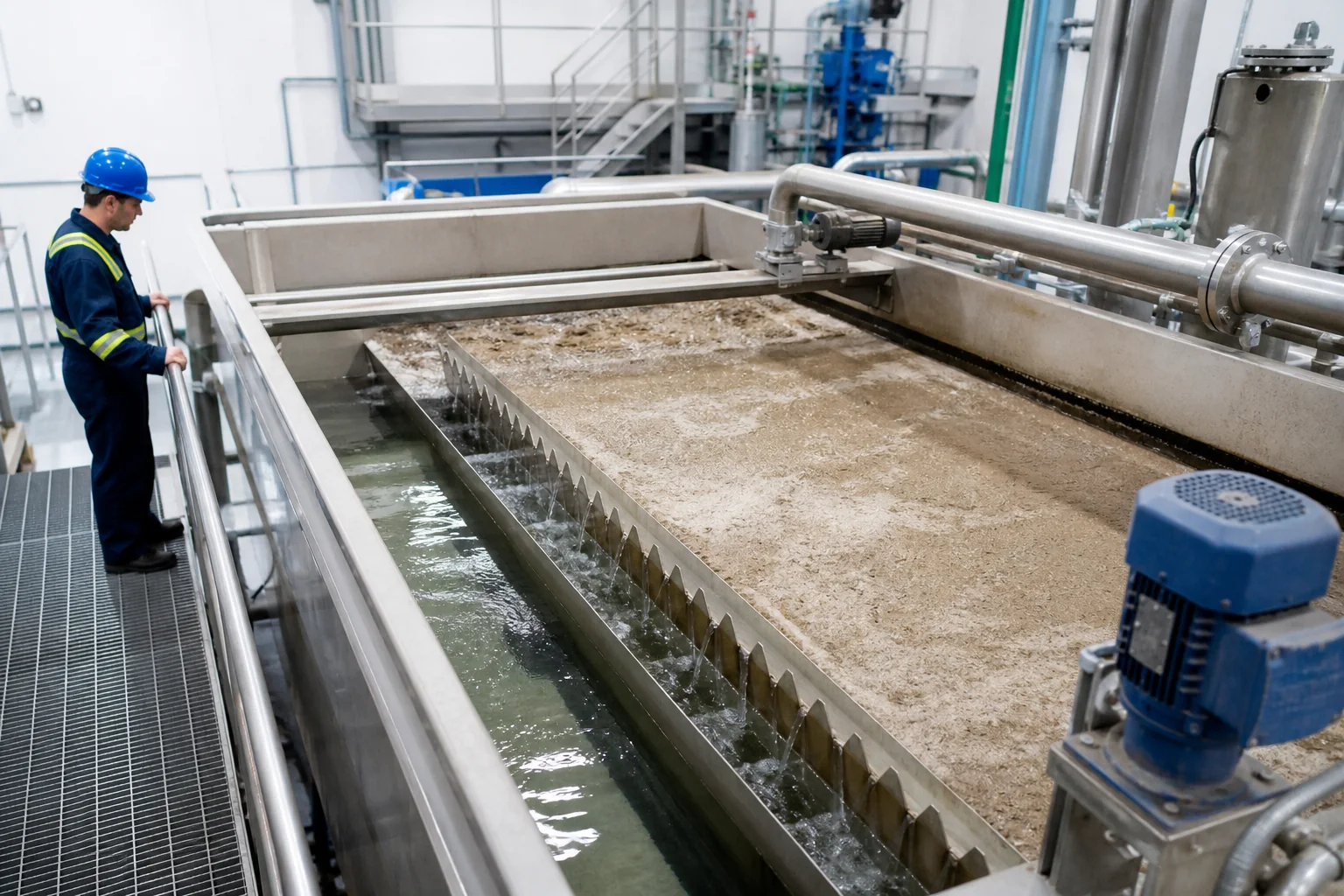
Recovered-paper effluent can vary with the incoming furnish, washing and production chemistry. A wastewater flocculant purchase should focus on the actual water-treatment duty. It should not be confused with selecting a paper-machine retention chemical merely because both products can be described as polyacrylamide.
Identify the treatment duty and feed range
Describe the collection point, fibre content, fines and relevant production or cleaning constituents. State whether the polymer is intended for water clarification, flotation or residual sludge dewatering. Those duties can have different feed and equipment requirements. Include samples from representative furnish or production changes. Do not request a universal recovered-paper grade based solely on the industry label; provide the upstream treatment sequence and the water or sludge endpoint that purchasing must support.
Control coagulation and polymer timing
Where coagulation precedes PAM, keep that step consistent while screening polymers. Compare the intended addition sequence and available mixing rather than changing every chemical at once. For flotation, evaluate float handling and treated water under a meaningful flotation trial, not only settled beakers. The DAF selection path explains why settling performance does not directly establish bubble attachment and float stability.
Judge fines removal and whole-process handling
Record treated-water suspended solids and the relevant plant quality measurements, together with the consistency and handling of separated solids. Do not imply that clarification necessarily removes all dissolved organic load. If reuse or another treatment stage follows, define its specific limits. Where separated sludge needs a press or centrifuge, evaluate that duty with its actual solids and equipment. An upstream flocculation result alone does not qualify a dewatering product.
Keep supply approval tied to the wastewater application
Specify product identity, application point, tested active-dose range and preparation method in the order approval. Include demand changes associated with production scheduling when estimating stock. Explain whether a supplier is quoting water treatment, sludge conditioning or both. Review the multi-plant purchasing checklist when central sourcing combines several mills, because different furnish and water loops may require separate candidate ranges.
Purchase review worksheet
Complete the evidence column with measured values, observations or an agreed document reference. An unanswered item is a reason to clarify the sample or quotation, not to assume that two products are equivalent. Keep the same worksheet with the trial record so the purchasing and operating teams approve the same conditions.
| Review item | Evidence to obtain | Decision before ordering |
|---|---|---|
| Duty | Wastewater point versus paper-machine chemical use | RFQ targets the correct application |
| Trial | Coagulation, mixing and separator conditions | Comparison reproduces the treatment sequence |
| Result | Water quality and separated-solids handling | Benefits are assessed beyond visible floc |
Request a focused PAM flocculant quotation
Send the feed source, solids concentration, pH or conductivity, operating temperature and separator type alongside the monthly quantity, package preference and destination. Include the specific observations in the worksheet above. If a current grade is being replaced, provide its available technical data and the active dose rather than only the trade name. Commercial availability, sample quantities and delivered terms should be confirmed for the selected product, not inferred from an illustrative application.
Arrange the comparison through the PAM trial planner and review quality documents and supply requirements before committing to a shipment. Gongyi Xinqi Polymer Co., Ltd. can review the application information and discuss a suitable sample range. Application suitability remains conditional on representative testing; a polymer recommendation is not a guarantee of plant performance or regulatory compliance.