
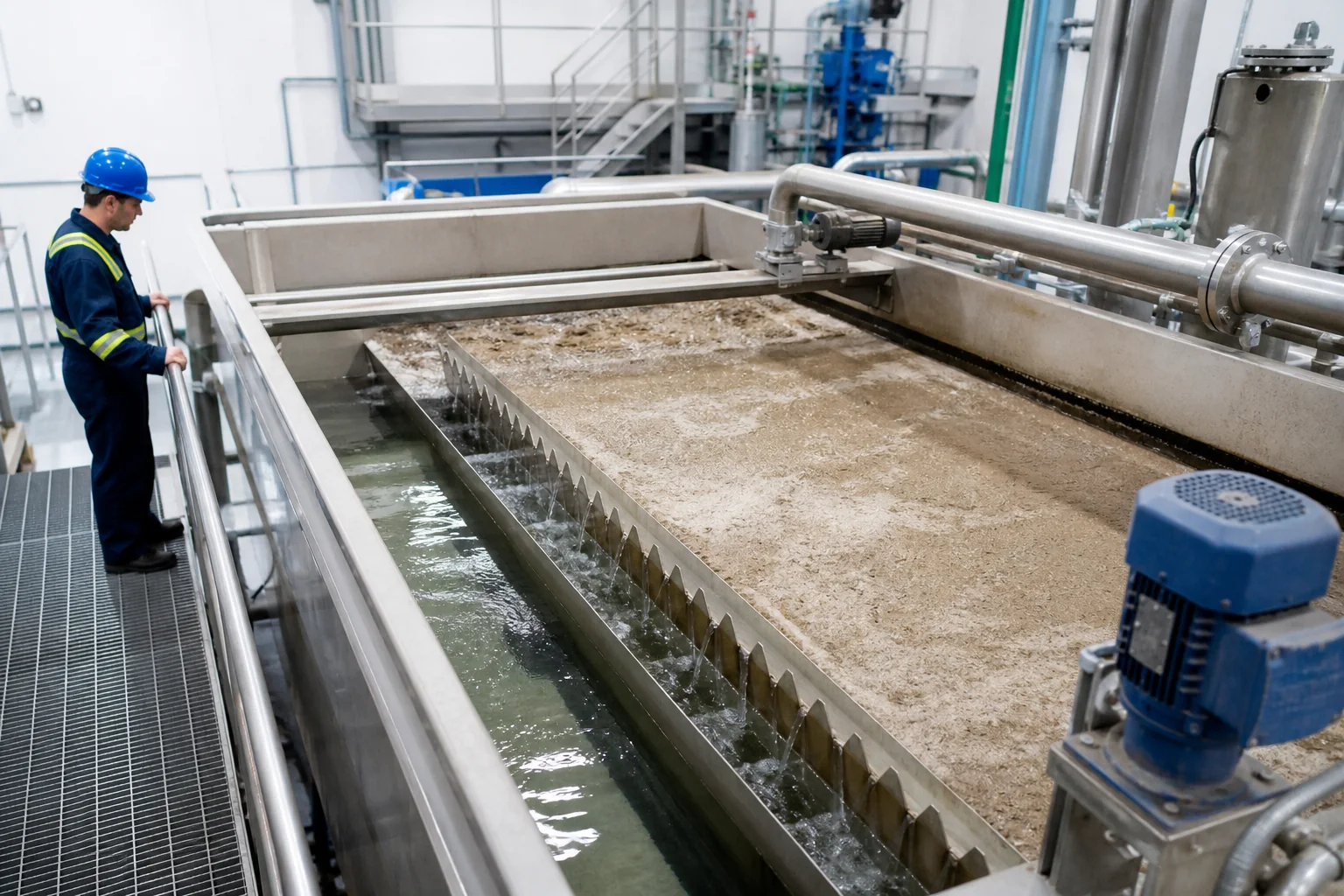
A brewery DAF polymer should be chosen from representative wastewater and flotation evidence, not from a generic food-industry description. Production losses, solids and cleaning cycles can change the feed. Clarify the DAF duty and any downstream treatment limits before selecting a sample range or placing a repeat order.
Represent production and cleaning variability
Identify the wastewater collection and equalization point, typical suspended solids and relevant pH or conductivity changes. Explain whether cleaning discharges are blended before DAF and how unusual releases are controlled. Sample the intended treatment feed, not a convenient clean stream. The polymer should be evaluated within the feed range the plant can actually control. A candidate is not a substitute for equalization or the upstream measures needed to manage abnormal chemical conditions.
Reproduce upstream chemistry and flotation
Keep pH adjustment or coagulation consistent while comparing PAM candidates. Record polymer injection timing, mixing and the representative flotation conditions. A settling test can help narrow the screen, but it cannot establish full DAF performance. Review the separator comparison guide and confirm the result with appropriate flotation and plant evidence. Avoid choosing only the largest floc if it handles poorly in the real flotation unit.
Evaluate float and downstream water together
Assess treated-water quality, float stability, solids handling and the practical operating dose. Depending on the plant, useful measurements can include suspended solids and other specified process endpoints. Do not promise that polymer flotation removes all dissolved organics or satisfies a discharge limit by itself. Record any downstream biological or other treatment constraints. If float sludge is subsequently dewatered, test that step rather than assuming the DAF optimum also minimizes its handling cost.
Quote the approved duty and operating window
Provide the proposed ionic family only when supported by evidence, and explain the actual DAF feed and upstream treatment. Include make-down method, monthly quantity, packaging and delivery destination. Use the total-cost comparison to consider useful dose and solids handling alongside product price. Retain the selected grade identity and preparation procedure with the trial result so procurement does not inadvertently replace a tested product with an unqualified “DAF polymer.”
Purchase review worksheet
Complete the evidence column with measured values, observations or an agreed document reference. An unanswered item is a reason to clarify the sample or quotation, not to assume that two products are equivalent. Keep the same worksheet with the trial record so the purchasing and operating teams approve the same conditions.
| Review item | Evidence to obtain | Decision before ordering |
|---|---|---|
| Feed window | Equalized production and cleaning conditions | Samples reflect the controlled operating range |
| DAF result | Float, water quality and chemical sequence | Candidate is qualified for flotation, not only settling |
| Downstream route | Treatment constraints and float-sludge handling | Whole-process cost is considered |
Request a focused PAM flocculant quotation
Send the feed source, solids concentration, pH or conductivity, operating temperature and separator type alongside the monthly quantity, package preference and destination. Include the specific observations in the worksheet above. If a current grade is being replaced, provide its available technical data and the active dose rather than only the trade name. Commercial availability, sample quantities and delivered terms should be confirmed for the selected product, not inferred from an illustrative application.
Arrange the comparison through the PAM trial planner and review quality documents and supply requirements before committing to a shipment. Gongyi Xinqi Polymer Co., Ltd. can review the application information and discuss a suitable sample range. Application suitability remains conditional on representative testing; a polymer recommendation is not a guarantee of plant performance or regulatory compliance.