
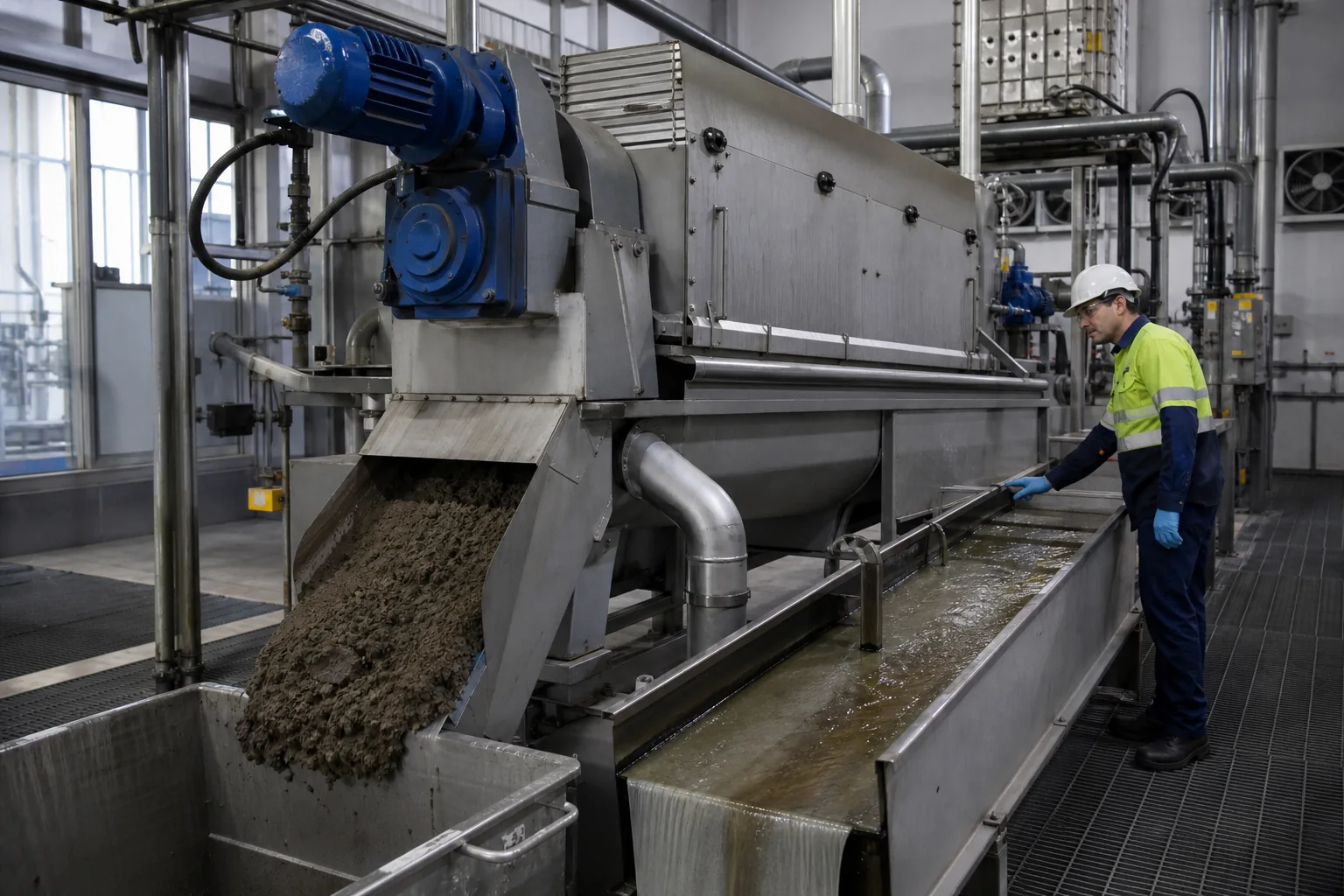
PAM flocculant for sludge dewatering should be selected against the actual sludge and machine. Cationic PAM is a frequent starting family for organic sludge, but charge density and molecular structure determine how the floc drains and survives mechanical stress.
Characterize the feed
Record sludge source, blend ratio, dry solids, volatile solids if available, pH, temperature, storage time and upstream coagulants. A change in primary-to-secondary sludge ratio can move the optimum even if the average solids concentration appears stable.
Use machine-specific endpoints
Centrifuge: capture, centrate clarity, torque, throughput and cake solids. Belt press: gravity-zone drainage, belt release, wash-water demand, capture and cake. Screw press: filtrate clarity, stable torque, throughput and cake discharge. Filter press: fill time, filtrate, pressure, cake permeability and release.
Calculate dose on dry solids
Prepared-solution flow is not a comparable dose unless solution concentration and sludge solids are known. Calculate active polymer kilograms per hour and divide by dry-solids tonnes per hour. Recalculate when sludge concentration or throughput changes.
Separate product failure from make-down failure
Check feeder calibration, wetting, aging time, stock concentration, dilution water and transfer shear. A good polymer prepared poorly can resemble a weak grade. The dosing calibration guide provides a traceable check before changing product.
Choose total cost, not lowest bag price
Compare polymer cost with captured solids, hauling, throughput, energy, wash water and disposal. A higher-price grade can be more economical if it reduces active dose or increases cake solids. Record enough operating data to calculate cost per tonne of dry solids processed.