
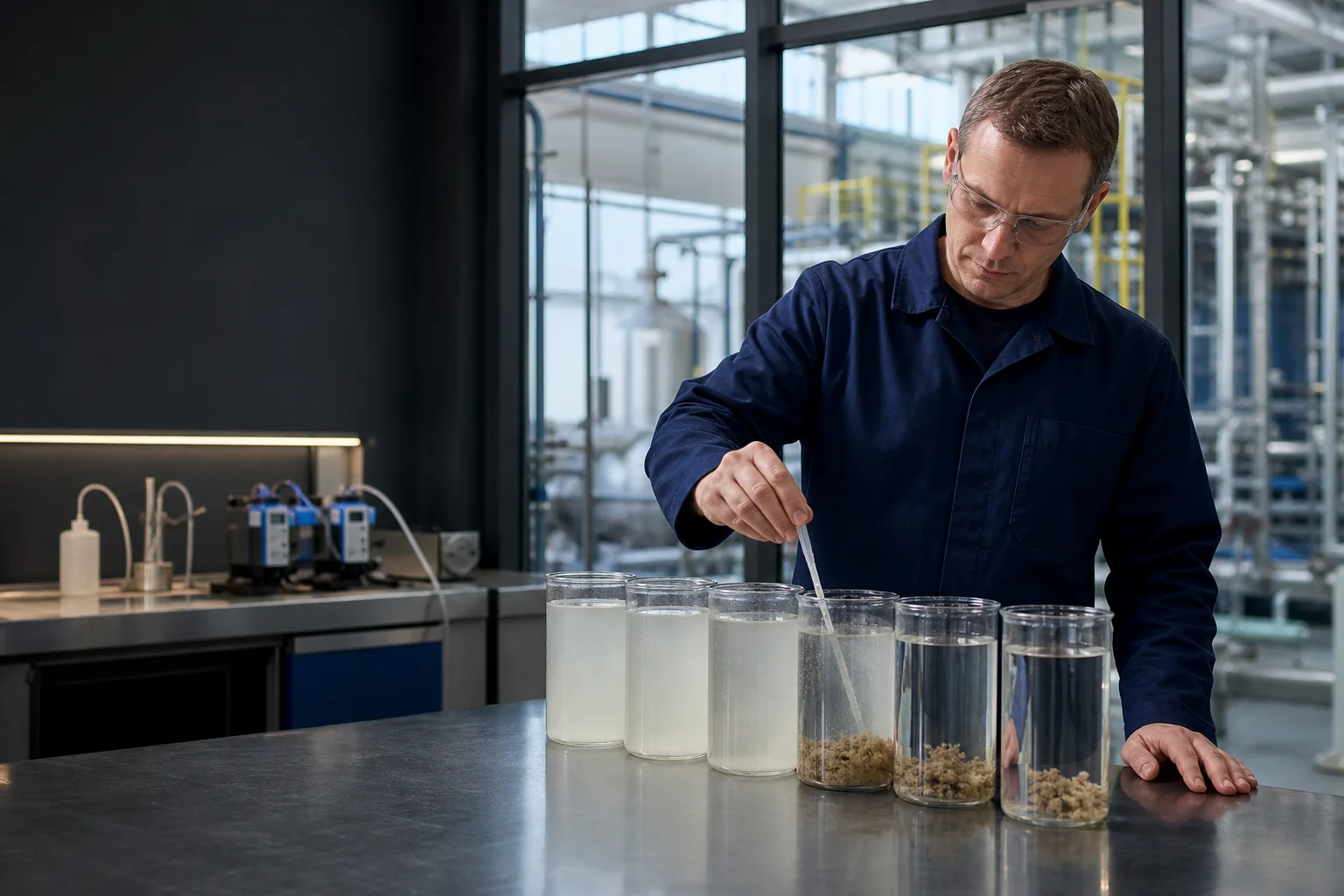
Where fresh water is limited, buyers may want to prepare PAM flocculant with recycled or saline water. That change must be tested explicitly. Preparation water and process water serve different roles, and suitability in a saline feed does not establish suitability for making the concentrated polymer solution.
Characterize both water sources
Collect representative make-down water and process feed separately. Record conductivity, pH, temperature and relevant dissolved constituents where analysis is available. Note changes caused by recycling or blending. Conductivity is a useful screening indicator but does not identify every ion or contaminant. Avoid requesting a universal grade based on one salinity value. Provide the actual source and anticipated range so the supplier can propose candidates with the correct preparation and application context.
Isolate preparation-water effects
Prepare the same candidate under controlled conditions with the proposed water and a suitable comparison water. Keep concentration, wetting, mixing and aging consistent. Then compare both solutions on the same feed. Observe residues, solution handling and separation response. This distinguishes an unsuitable make-down condition from a grade that is unsuitable for the feed. Do not compare two polymers while simultaneously changing water source, concentration and dosing sequence; that experiment cannot explain the cause of a difference.
Check the complete operating range
Recycled water can vary with production, evaporation or cleaning discharge. A candidate that works with a mild sample may struggle under a more concentrated condition. Include the expected limits and discuss any additional treatment or fresh-water blending with operations. Those changes have a cost and capacity impact. The solution and pump compatibility review should accompany the water comparison when viscosity or dosing delivery changes.
Qualify the intended water procedure
State the approved preparation-water source and tested range in the product record. If fresh water was used for qualification, do not later switch to recycled water as an unrecorded cost-saving measure. Request preparation guidance for the selected grade and review storage of the finished solution. Document an alternative water route if normal supply is interrupted. Use the sample-testing checklist to retain dose, preparation and separation evidence together.
Purchase review worksheet
Complete the evidence column with measured values, observations or an agreed document reference. An unanswered item is a reason to clarify the sample or quotation, not to assume that two products are equivalent. Keep the same worksheet with the trial record so the purchasing and operating teams approve the same conditions.
| Review item | Evidence to obtain | Decision before ordering |
|---|---|---|
| Water identity | Separate make-down and feed analyses | Testing represents the intended sources |
| Controlled comparison | Same grade, concentration, aging and feed | Water effect is distinguished from grade effect |
| Approval range | Expected variability and fallback water | Operating procedure stays within tested conditions |
Request a focused PAM flocculant quotation
Send the feed source, solids concentration, pH or conductivity, operating temperature and separator type alongside the monthly quantity, package preference and destination. Include the specific observations in the worksheet above. If a current grade is being replaced, provide its available technical data and the active dose rather than only the trade name. Commercial availability, sample quantities and delivered terms should be confirmed for the selected product, not inferred from an illustrative application.
Arrange the comparison through the PAM trial planner and review quality documents and supply requirements before committing to a shipment. Gongyi Xinqi Polymer Co., Ltd. can review the application information and discuss a suitable sample range. Application suitability remains conditional on representative testing; a polymer recommendation is not a guarantee of plant performance or regulatory compliance.