
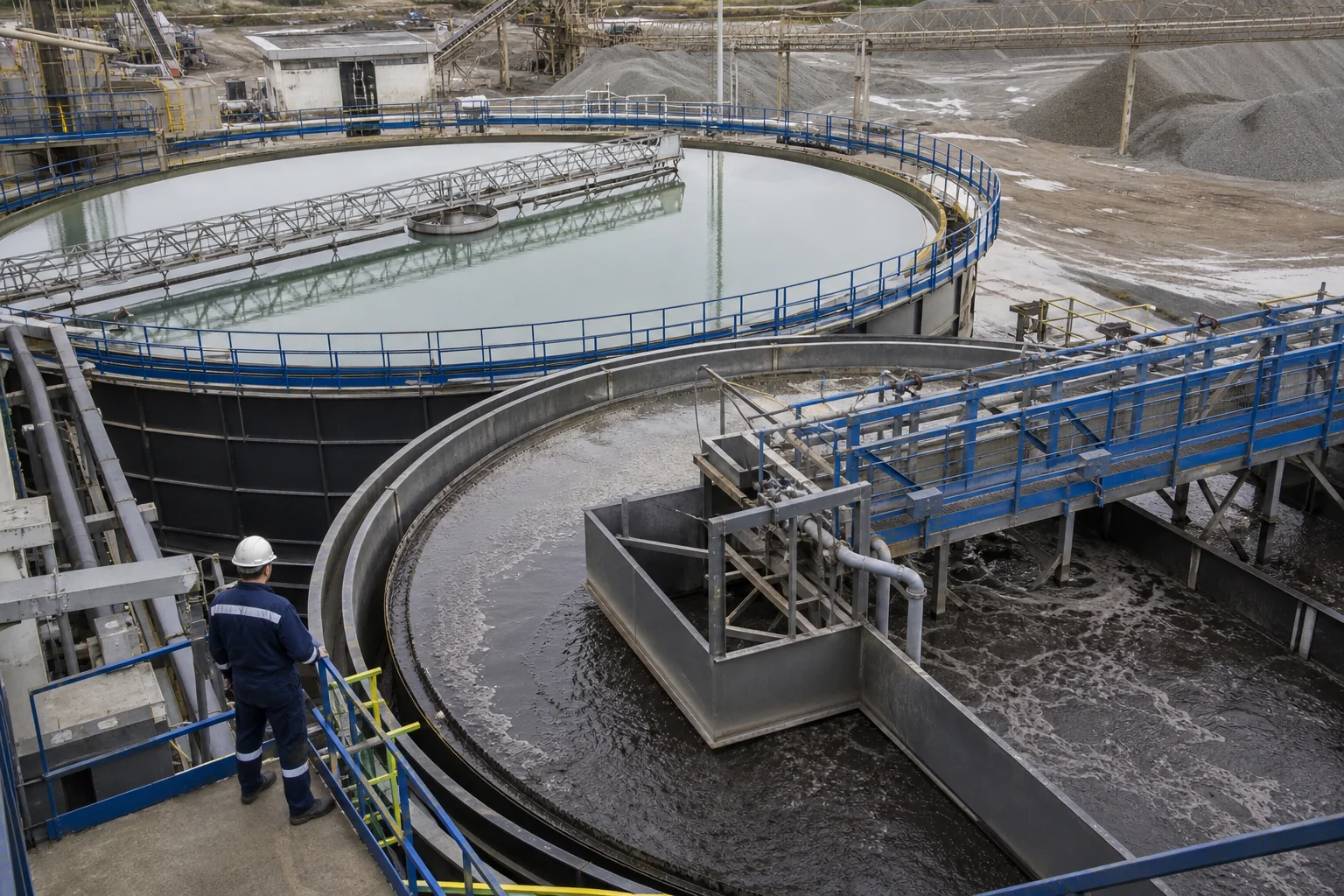
Bulk purchasing for a continuously operated clarifier should begin with verified consumption and a proven grade. A large order can reduce ordering frequency, but it also increases exposure to demand changes, storage conditions and an incorrect application assumption. Size the shipment around useful stock cover rather than an attractive unit price alone.
Estimate normal and difficult-feed consumption
Use representative flow and solids records to calculate demand across normal operation, shutdowns and challenging feed periods. Clarification doses may be reported per volume of treated water, while thickening duties can be expressed per dry solids. Keep the basis consistent and state it in the forecast. Reconcile the calculation with bags issued to the make-down system. An unexplained discrepancy may reflect pump calibration, stock concentration or losses; investigate it before purchasing several months of inventory.
Verify capacity at the intended dose
Make-down, aging tanks and dosing pumps must support the upper operating demand without sacrificing preparation quality. Check the actual available solution volume, preparation cycle and transfer capacity. An undersized system cannot be fixed merely by ordering a stronger-sounding grade or raising the stock concentration. Compare candidates within equipment limits. The pump calibration and dose calculation guide provides the relevant conversion checks, while the clarifier and thickener product path identifies separation endpoints.
Match shipment size to usable storage
Calculate usable dry storage, not the full warehouse floor area. Include access, protected unloading, separation from wet equipment and safe stock rotation. Confirm the supplier storage recommendation and the expected remaining shelf life of the quoted lots. Large bags may suit one feeder but not another. A package that saves freight yet requires unsafe manual transfer is not a sound purchasing choice. Request actual package dimensions and unloading requirements before reserving the delivery slot.
Tie repeat orders to operating evidence
Approve a specific grade and retain an incoming reference sample, particularly when the clarification duty is sensitive to feed changes. Track consumption and overflow performance against the forecast so later orders can be adjusted. Agree supply lead time and the point at which the next shipment must be confirmed. Treat trial success, product identity and delivered commercial terms as separate checks. A bulk discount is relevant only after the product and the quantity are technically and operationally justified.
Purchase review worksheet
Complete the evidence column with measured values, observations or an agreed document reference. An unanswered item is a reason to clarify the sample or quotation, not to assume that two products are equivalent. Keep the same worksheet with the trial record so the purchasing and operating teams approve the same conditions.
| Review item | Evidence to obtain | Decision before ordering |
|---|---|---|
| Consumption | Flow or dry-solids dose basis plus actual issues | Order covers realistic operating demand |
| Make-down | Peak solution requirement and available capacity | Preparation remains within approved limits |
| Stock | Protected space, rotation and remaining shelf life | Shipment can be stored and consumed safely |
Request a focused PAM flocculant quotation
Send the feed source, solids concentration, pH or conductivity, operating temperature and separator type alongside the monthly quantity, package preference and destination. Include the specific observations in the worksheet above. If a current grade is being replaced, provide its available technical data and the active dose rather than only the trade name. Commercial availability, sample quantities and delivered terms should be confirmed for the selected product, not inferred from an illustrative application.
Arrange the comparison through the PAM trial planner and review quality documents and supply requirements before committing to a shipment. Gongyi Xinqi Polymer Co., Ltd. can review the application information and discuss a suitable sample range. Application suitability remains conditional on representative testing; a polymer recommendation is not a guarantee of plant performance or regulatory compliance.