
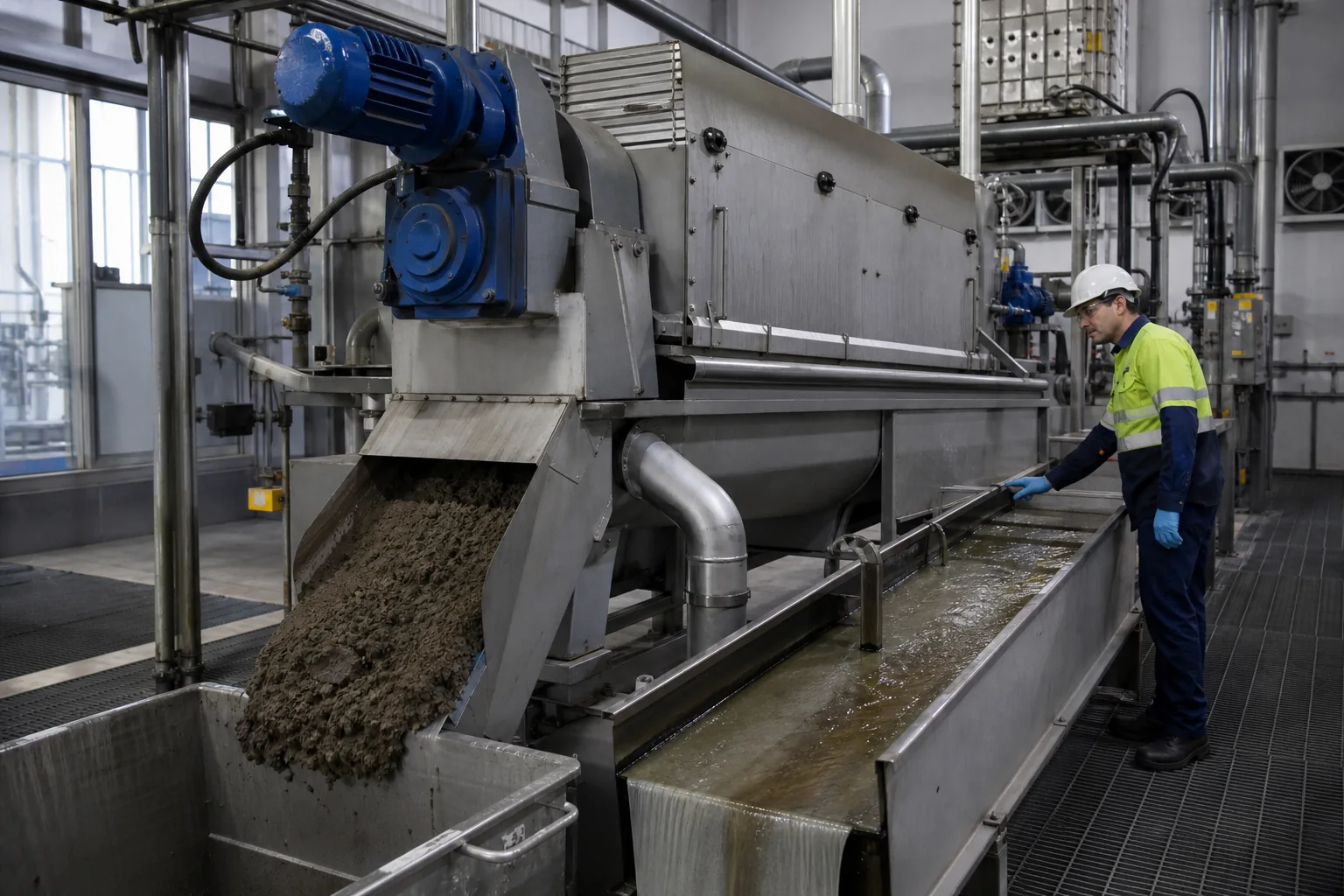
Cationic PAM may be a candidate for conditioning some digestate solids, but the word “digestate” does not determine the grade or guarantee screw-press performance. Feed origin, solids characteristics and the equipment configuration must guide the comparison. Purchase against measured separation and handling results.
Describe the digestate and prior separation
State the digestion feed sources and whether coarse solids have already been removed. Record solids concentration, temperature and the normal variability delivered to the screw press. Explain any upstream chemicals and the transfer path. Samples taken after long settling or storage may not represent the press feed. Include a representative difficult condition so candidate selection does not rely on one unusually favourable sample. The cationic PAM product path is a starting screen, not a universal recommendation.
Condition for the installed screw press
Match polymer addition and mixing to the available conditioning arrangement. Assess whether floc survives transfer into the press and whether the feed remains suitable for its operating settings. Bench observations can narrow the range, but equipment trials are needed for meaningful press performance. Avoid copying a dose from a centrifuge or belt press treating a different feed. Compare candidates at controlled active doses and keep screw settings documented during the trial.
Measure capture, filtrate and cake
Judge useful solids capture alongside filtrate quality, cake handling and practical throughput. Cake that appears dry does not by itself show good capture if substantial fines pass into the liquid stream. Record the relevant mass and solids measurements where practicable. Note whether the selected dose creates difficult cake release or downstream handling. Review the dewatering selection criteria to keep laboratory floc size separate from equipment-specific acceptance.
Define quotation limits and receiving checks
Include the approved product identifier, tested feed range, preparation procedure and operating dose window in the purchase record. Estimate demand from dry-solids loading where that basis is appropriate and clearly measured. Confirm packaging and powder handling rather than assuming that all cationic powders feed identically. A repeat supply should preserve grade and lot traceability. If digestate sources change materially, review application approval instead of treating an old successful trial as permanent proof.
Purchase review worksheet
Complete the evidence column with measured values, observations or an agreed document reference. An unanswered item is a reason to clarify the sample or quotation, not to assume that two products are equivalent. Keep the same worksheet with the trial record so the purchasing and operating teams approve the same conditions.
| Review item | Evidence to obtain | Decision before ordering |
|---|---|---|
| Feed | Source, prior separation and representative solids range | Candidate matches the actual screw-press duty |
| Press result | Capture, filtrate, cake and throughput | One attractive endpoint does not hide a poor balance |
| Approval | Grade, preparation and tested operating conditions | Repeat orders remain traceable to the qualified product |
Request a focused PAM flocculant quotation
Send the feed source, solids concentration, pH or conductivity, operating temperature and separator type alongside the monthly quantity, package preference and destination. Include the specific observations in the worksheet above. If a current grade is being replaced, provide its available technical data and the active dose rather than only the trade name. Commercial availability, sample quantities and delivered terms should be confirmed for the selected product, not inferred from an illustrative application.
Arrange the comparison through the PAM trial planner and review quality documents and supply requirements before committing to a shipment. Gongyi Xinqi Polymer Co., Ltd. can review the application information and discuss a suitable sample range. Application suitability remains conditional on representative testing; a polymer recommendation is not a guarantee of plant performance or regulatory compliance.