
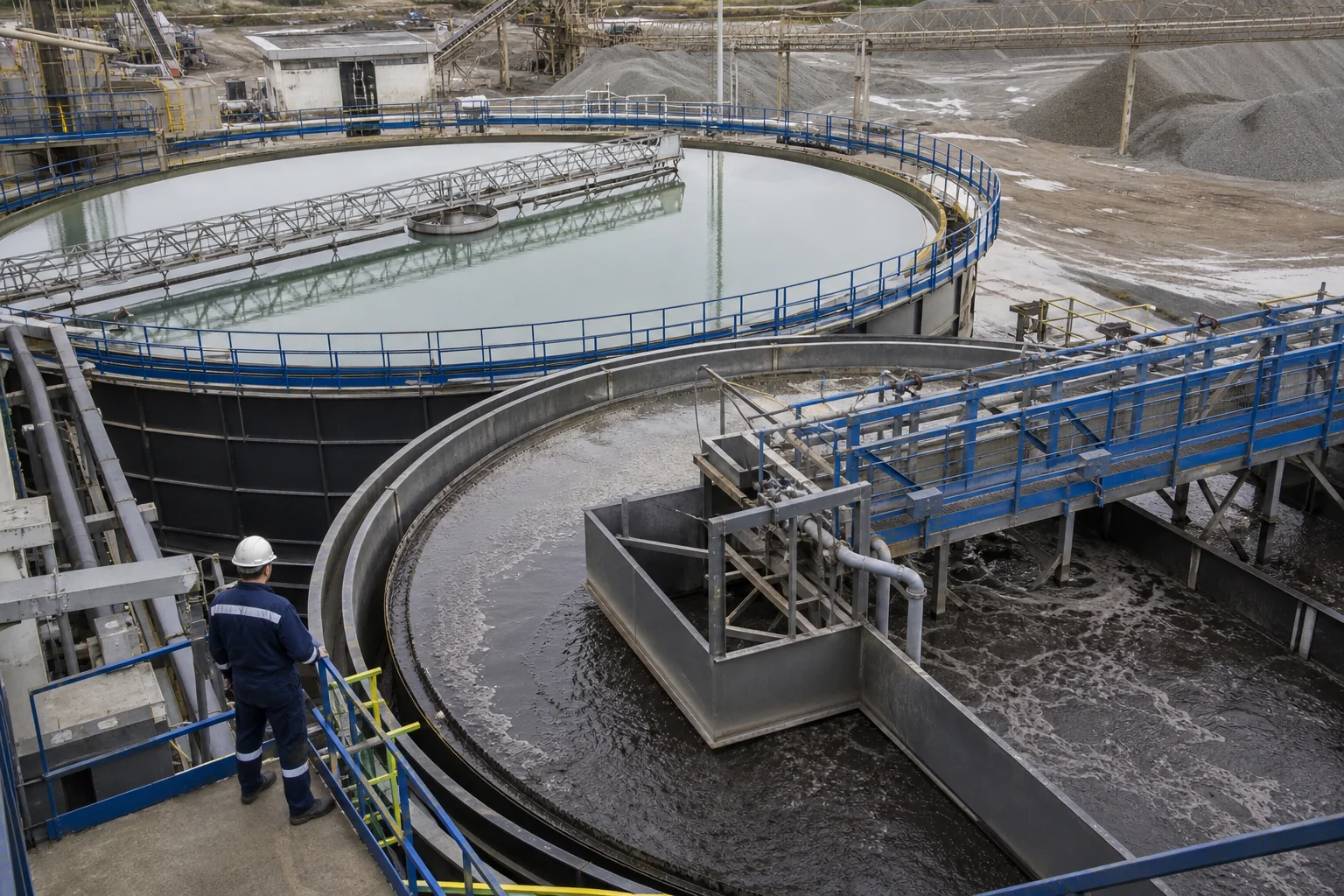
PAM flocculant can help aggregate suspended or precipitated solids in a metal-finishing treatment process. It is not a universal chemical for removing dissolved metals. The buying decision must account for the precipitation and coagulation steps that create the solids, followed by the installed separator and sludge-handling duty.
Define the wastewater streams and upstream treatment
Identify plating, rinsing, polishing or other contributing streams without assuming that their chemistry is interchangeable. Record how pH adjustment and upstream reagents are controlled. Complexing constituents can affect treatment requirements, so obtain appropriate process advice rather than attributing every poor result to the polymer. Provide a representative sample after the intended upstream treatment when evaluating flocculation. A raw-water comparison cannot reproduce a treatment train that first changes the dissolved and suspended fractions.
Test addition sequence with the installed separator
Compare candidates at the actual point where polymer is intended to enter. Keep precipitation, coagulation, mixing and residence time consistent between runs. For clarification, assess settled solids, supernatant quality and the practical settling time. For filtration or flotation, reproduce the relevant handling conditions as far as the trial allows. The equipment comparison guide helps prevent selection solely from the largest visible floc.
Measure quality beyond visual clarity
Clear-looking water does not prove that dissolved contaminants meet a discharge or reuse requirement. Use the analytical endpoints appropriate to the plant, distinguishing total and dissolved measurements where relevant. Polymer trials should include the solids-separation result and any downstream constraints. Retain samples and operating conditions according to the plant procedure. Do not promise a particular compliance result from a candidate grade without verified treatment evidence and the necessary broader process controls.
Include sludge handling in the purchase decision
Precipitated solids still require thickening, dewatering and appropriate management after clarification. A candidate that improves the overflow but creates difficult downstream sludge may increase total cost. Evaluate the relevant sludge duty independently if feed and equipment differ. Request a focused sample range through the trial planner, with the upstream chemistry, separator and acceptance analyses clearly identified. Anionic, cationic or nonionic candidates should be chosen from evidence rather than from the industry name alone.
Purchase review worksheet
Complete the evidence column with measured values, observations or an agreed document reference. An unanswered item is a reason to clarify the sample or quotation, not to assume that two products are equivalent. Keep the same worksheet with the trial record so the purchasing and operating teams approve the same conditions.
| Review item | Evidence to obtain | Decision before ordering |
|---|---|---|
| Treatment stage | Stream sources, upstream reagents and pH control | Sample represents the intended flocculation point |
| Quality endpoint | Relevant analytical and suspended-solids results | Visual clarity is not treated as compliance proof |
| Sludge route | Underflow and dewatering observations | Whole-process handling is acceptable |
Request a focused PAM flocculant quotation
Send the feed source, solids concentration, pH or conductivity, operating temperature and separator type alongside the monthly quantity, package preference and destination. Include the specific observations in the worksheet above. If a current grade is being replaced, provide its available technical data and the active dose rather than only the trade name. Commercial availability, sample quantities and delivered terms should be confirmed for the selected product, not inferred from an illustrative application.
Arrange the comparison through the PAM trial planner and review quality documents and supply requirements before committing to a shipment. Gongyi Xinqi Polymer Co., Ltd. can review the application information and discuss a suitable sample range. Application suitability remains conditional on representative testing; a polymer recommendation is not a guarantee of plant performance or regulatory compliance.