
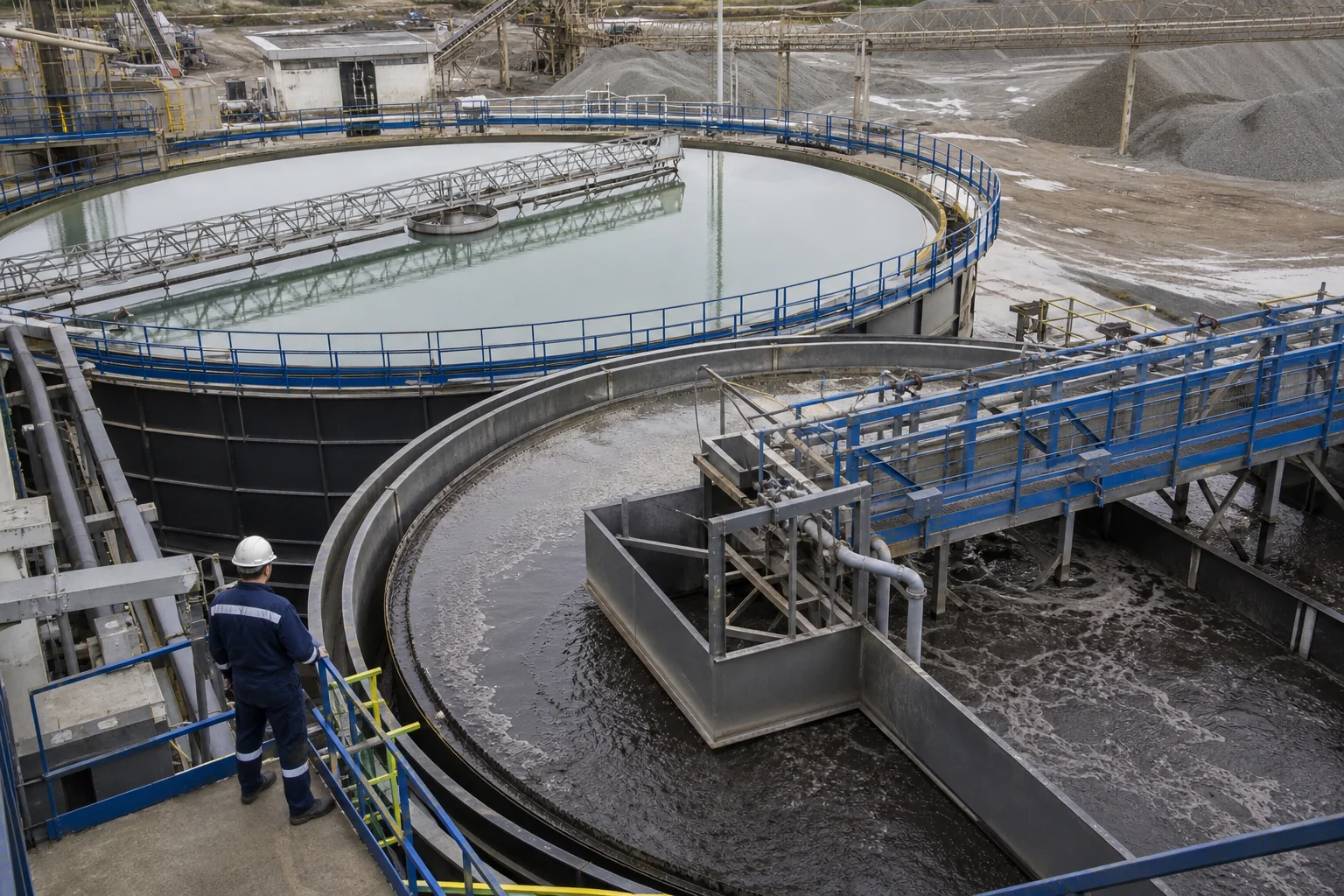
Ceramic-process water can contain fine mineral solids that settle slowly without appropriate treatment. Buyers should define the production stream and reuse objective before requesting PAM flocculant. Clay preparation water, polishing water and mixed glaze-related streams may need different chemical treatment and separate acceptance checks.
Separate streams that have different treatment needs
Record whether the sample comes from body preparation, washing, polishing or a mixed collection system. Identify relevant process chemicals and the amount of fine solids. Where glaze or other constituents introduce additional treatment constraints, do not treat solids clarification as proof that every contaminant is removed. Provide the water reuse or discharge target alongside the feed description. The polymer screen should be based on representative plant water rather than a clean mineral suspension made only for the trial.
Compare clarification and sediment handling
Measure settling behaviour and supernatant quality over a time relevant to the actual clarifier. Note whether the settled solids compact, remain readily pumpable or form a difficult deposit. A large initial floc can be misleading if it breaks during transfer or produces an impractical underflow. Use the clarifier and thickener selection path to connect the beaker comparison with hydraulic loading and downstream handling.
Check compatibility with the reuse loop
Recycled water may change as dissolved constituents accumulate. Include the expected range rather than testing only water from a freshly started process. Ask production staff which water-quality characteristics affect the ceramic operation. Suspended-solids reduction alone does not establish unrestricted suitability for every production step. Compare the candidate at the intended active dose and review whether excess polymer or unstable clarification could affect the reuse system. State the limits of the test when qualifying a grade.
Specify demand and preparation constraints
Estimate consumption from actual treated flow or solids loading using a clearly stated dose basis. Describe the powder feeder, preparation water and available aging time when requesting dry PAM. The feeder selection guide helps identify handling constraints before the shipment arrives. A purchasing specification should identify the approved grade, packaging, trial evidence and relevant receiving checks, not rely only on the phrase “ceramic wastewater polymer.”
Purchase review worksheet
Complete the evidence column with measured values, observations or an agreed document reference. An unanswered item is a reason to clarify the sample or quotation, not to assume that two products are equivalent. Keep the same worksheet with the trial record so the purchasing and operating teams approve the same conditions.
| Review item | Evidence to obtain | Decision before ordering |
|---|---|---|
| Stream | Production origin and relevant chemistry | Sample matches the duty being quoted |
| Separation | Overflow, compaction and pumpable underflow | Grade suits clarification and sludge handling |
| Reuse | Production water limits and recycled-water range | Clarification does not overstate reuse suitability |
Request a focused PAM flocculant quotation
Send the feed source, solids concentration, pH or conductivity, operating temperature and separator type alongside the monthly quantity, package preference and destination. Include the specific observations in the worksheet above. If a current grade is being replaced, provide its available technical data and the active dose rather than only the trade name. Commercial availability, sample quantities and delivered terms should be confirmed for the selected product, not inferred from an illustrative application.
Arrange the comparison through the PAM trial planner and review quality documents and supply requirements before committing to a shipment. Gongyi Xinqi Polymer Co., Ltd. can review the application information and discuss a suitable sample range. Application suitability remains conditional on representative testing; a polymer recommendation is not a guarantee of plant performance or regulatory compliance.