
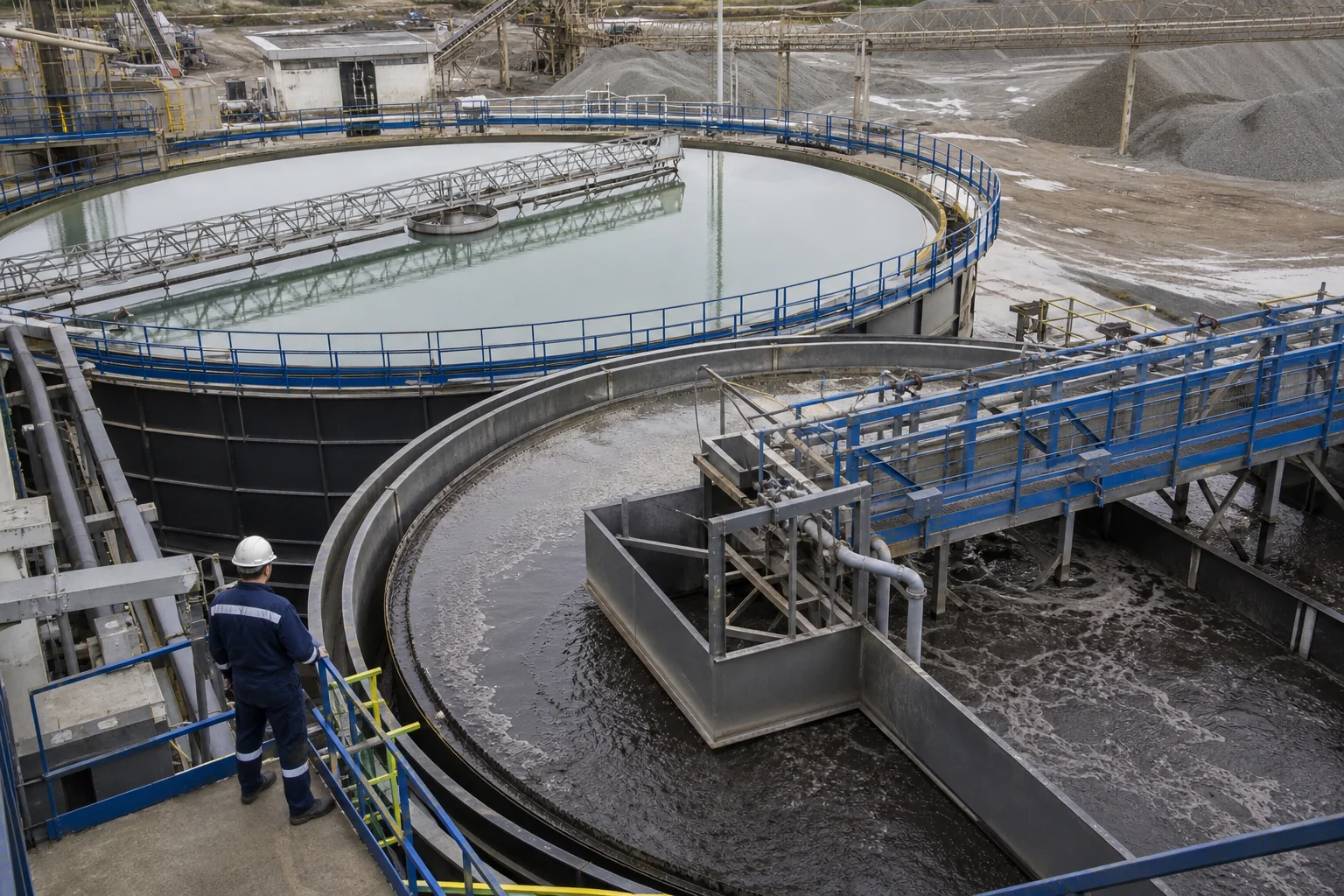
Stone-cutting operations often purchase PAM to recover water and manage fine mineral solids. The suitable grade depends on the stone mix, water chemistry and clarification or pressing equipment. A recommendation based only on “marble” or “granite” is a starting hypothesis, not a qualified purchasing specification.
Collect slurry from representative production
Identify the stone types and whether polishing, cutting and wash streams are combined. Sample the feed after the normal upstream collection and mixing steps. Record solids concentration, pH and the recycled-water condition. A dilute sample from a quiet period may not represent the thickest production slurry. Where stone sources change, include the expected range in the comparison rather than assuming that an approved grade will remain optimal for every incoming material.
Measure recovered-water quality at realistic timing
Compare dose ranges and observe settling speed, fine-solids carryover and the stability of the recovered water. Use the available separation time as a constraint; an attractive result after a very long settling period may not support the plant throughput. Check the effect of normal transfer and mixing on floc integrity. Refer to charge, solids and equipment selection when deciding which ionic candidates to request.
Assess the sludge sent to the press
If clarified solids proceed to a filter press, include feed pumpability, filtration behaviour and cake release in the trial assessment. Polymer that makes a very bulky or difficult sludge can undermine the benefit of cleaner recycled water. Do not assume that a clarifier optimum is also a press optimum. Discuss whether one treatment point or separate conditioning duties are being purchased. Equipment evidence should determine the practical dose window rather than the largest beaker floc.
Quote the actual preparation and supply arrangement
Describe dry powder handling, make-down water, tank cycle and expected monthly consumption. Confirm packaging that can be transferred safely into the existing feeder. Account for production interruptions when sizing stock, using the continuous clarification purchasing guide. Retain a representative approved sample and record the product identity, preparation method and acceptance results so later deliveries can be compared against the same operating duty.
Purchase review worksheet
Complete the evidence column with measured values, observations or an agreed document reference. An unanswered item is a reason to clarify the sample or quotation, not to assume that two products are equivalent. Keep the same worksheet with the trial record so the purchasing and operating teams approve the same conditions.
| Review item | Evidence to obtain | Decision before ordering |
|---|---|---|
| Stone feed | Stone mix and solids range | Trial includes normal production variability |
| Recovered water | Settling time and fine-solids carryover | Result supports practical plant throughput |
| Press duty | Pumpability, filtration and cake handling | Water recovery does not impair solids disposal |
Request a focused PAM flocculant quotation
Send the feed source, solids concentration, pH or conductivity, operating temperature and separator type alongside the monthly quantity, package preference and destination. Include the specific observations in the worksheet above. If a current grade is being replaced, provide its available technical data and the active dose rather than only the trade name. Commercial availability, sample quantities and delivered terms should be confirmed for the selected product, not inferred from an illustrative application.
Arrange the comparison through the PAM trial planner and review quality documents and supply requirements before committing to a shipment. Gongyi Xinqi Polymer Co., Ltd. can review the application information and discuss a suitable sample range. Application suitability remains conditional on representative testing; a polymer recommendation is not a guarantee of plant performance or regulatory compliance.