
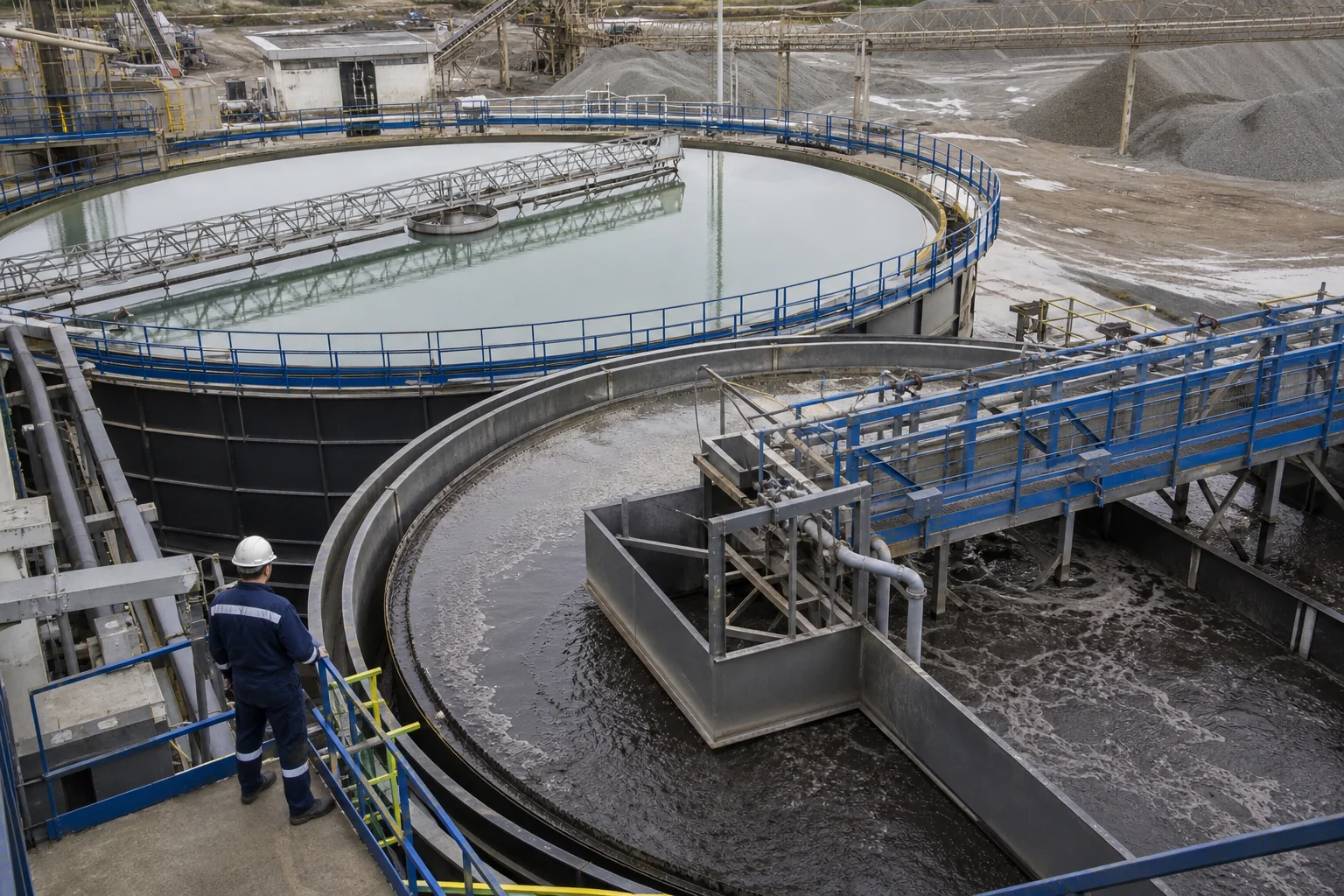
A lamella clarifier purchase should target stable solids separation at the installed operating conditions. Large jar-test floc is not the sole criterion. The selected PAM must work with upstream treatment, transfer into the plate zone and the plant’s sludge-removal arrangement.
Document hydraulic and solids conditions
Provide normal and peak flow, solids concentration and the nature of the suspended material. Identify upstream coagulation and the available flocculation time. Explain whether changing production or rainfall creates difficult periods. A polymer cannot make any clarifier capacity limitation disappear. Where performance is poor, distinguish inadequate chemical conditioning from hydraulic overload or sludge-management problems before requesting a stronger or more expensive grade.
Preserve representative transfer and mixing
Compare candidate polymers using the intended addition sequence and meaningful mixing conditions. Include observations after transfer or controlled shear where this represents the plant. A delicate floc that settles attractively in a still jar may not survive the real feed path. Refer to the pin floc, overdose and shear diagnosis when trial behaviour is unstable. Do not treat higher dose as the default solution to every poor separation result.
Assess overflow and sludge withdrawal
Measure the relevant overflow quality over a realistic separation period and observe the settled-solids condition. Include sludge withdrawal frequency and pumpability in the plant trial. Changes in settled solids can affect operating reliability even when the overflow improves. Record whether plate-zone behaviour and cleaning requirements remain manageable. Performance claims should be limited to the tested feed and operating window rather than presented as a guaranteed upgrade for every lamella installation.
Convert the trial into a purchase record
Specify the candidate identity, active-dose basis, preparation method and the conditions under which it was approved. Request supply details for the selected grade, including documents, packaging and lead time. Use the purchase specification worksheet to preserve the distinction between brochure characteristics and application acceptance. For repeated supply, retain an approved reference sample and compare incoming lots where the process risk justifies it.
Purchase review worksheet
Complete the evidence column with measured values, observations or an agreed document reference. An unanswered item is a reason to clarify the sample or quotation, not to assume that two products are equivalent. Keep the same worksheet with the trial record so the purchasing and operating teams approve the same conditions.
| Review item | Evidence to obtain | Decision before ordering |
|---|---|---|
| Duty | Flow, solids and upstream treatment range | Chemical screen reflects the real clarifier load |
| Floc transfer | Mixing and feed-path observations | Selected floc survives representative handling |
| Removal | Overflow quality and sludge withdrawal | Grade supports stable operation, not only fast settling |
Request a focused PAM flocculant quotation
Send the feed source, solids concentration, pH or conductivity, operating temperature and separator type alongside the monthly quantity, package preference and destination. Include the specific observations in the worksheet above. If a current grade is being replaced, provide its available technical data and the active dose rather than only the trade name. Commercial availability, sample quantities and delivered terms should be confirmed for the selected product, not inferred from an illustrative application.
Arrange the comparison through the PAM trial planner and review quality documents and supply requirements before committing to a shipment. Gongyi Xinqi Polymer Co., Ltd. can review the application information and discuss a suitable sample range. Application suitability remains conditional on representative testing; a polymer recommendation is not a guarantee of plant performance or regulatory compliance.